For a bank’s infrastructure team, installing a patch is only one part of the job. Someone has to decide which servers are in scope, arrange downtime with application owners, and show that services came back healthy. When those decisions live across tickets, spreadsheets and chat messages, each maintenance window can feel like starting over.
That work extends to the automation platform itself. On 24 November 2026, Red Hat recorded a maintenance update for its managed Ansible on Azure offering and advised customers to review and update their execution environments periodically. The update is a useful reminder to keep the tooling that runs your playbooks inside your maintenance plan. Red Hat maintenance log
Where manual server patching breaks down
Manual patching becomes hard to manage when servers have different configurations, application owners work to different maintenance windows, and reboot dependencies are poorly documented. A successful package update tells you little about whether customers can still use the application.
Start by agreeing on four things for each server group: what is in scope, who approves the change, when to pause or roll back, and what evidence to capture. Keep exceptions visible, with an owner and a review date. Otherwise, a server excluded from one maintenance window can quietly drop out of future plans.
In its 2025 APAC Innovation Awards announcement, Red Hat described how Malaysia’s AFFIN Bank used Ansible Automation Platform to automate server patching, change tracking and disaster recovery processes. Red Hat reported shorter patching times, fewer configuration errors and improved system reliability. Its announcement gave no numeric before-and-after figures. Red Hat’s public account of the AFFIN Bank case
For other infrastructure teams, a practical takeaway is to plan patch execution and change evidence together. When each run produces a record of the hosts, outcomes and exceptions, the team can review what happened while the details are still fresh.
Design the pilot around a decision to proceed
Pick a small group of similar RHEL servers with known dependencies and a named service owner. In a representative test environment, confirm disk space, repository access and expected reboot behaviour. For the production pilot, agree with the service owner on a health check that reflects how users actually rely on the service.
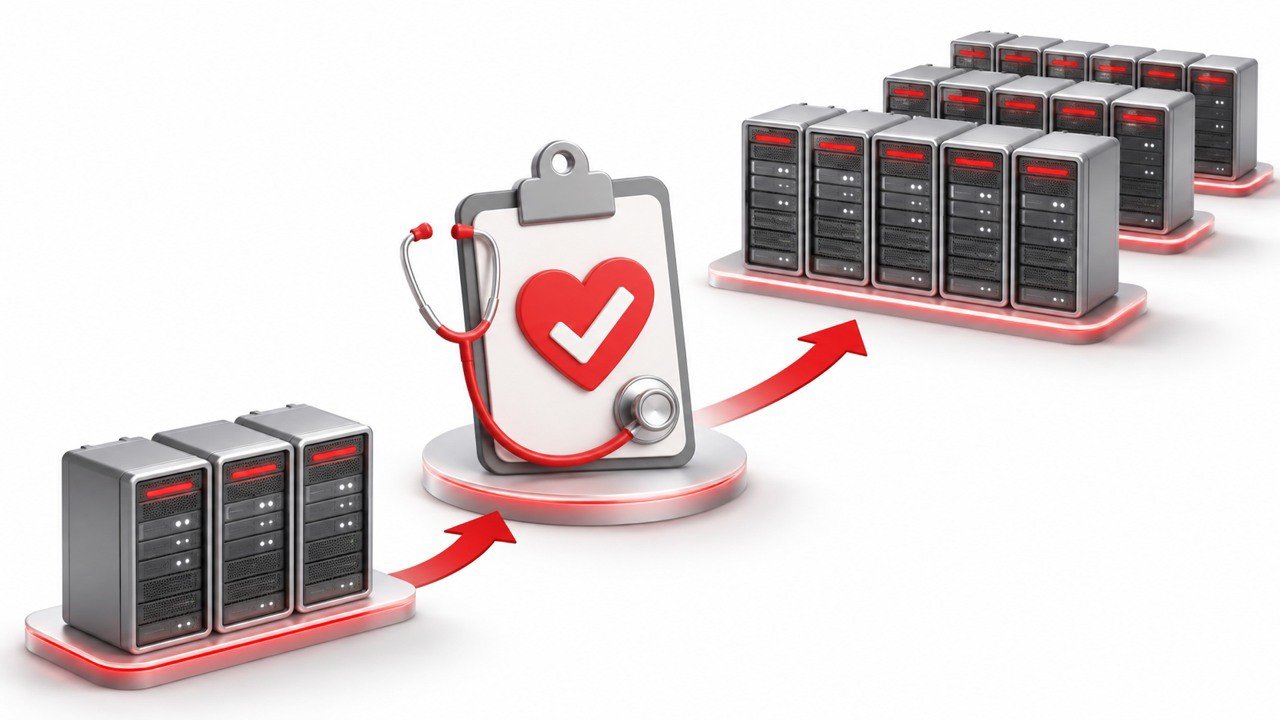
Patch the pilot group during the approved window. Review application health and the job results before moving to the next wave. If a check fails, pause, follow the recovery plan and capture enough detail to decide whether to reschedule. Set those stop conditions before the window opens.
Use a controlled inventory to define the target group. Put pre-checks, approved updates and post-update checks in version-controlled playbooks. Use a workflow approval step where an operator or service owner needs to decide whether the next stage can run. Run changes in batches sized for the service’s redundancy and recovery limits.
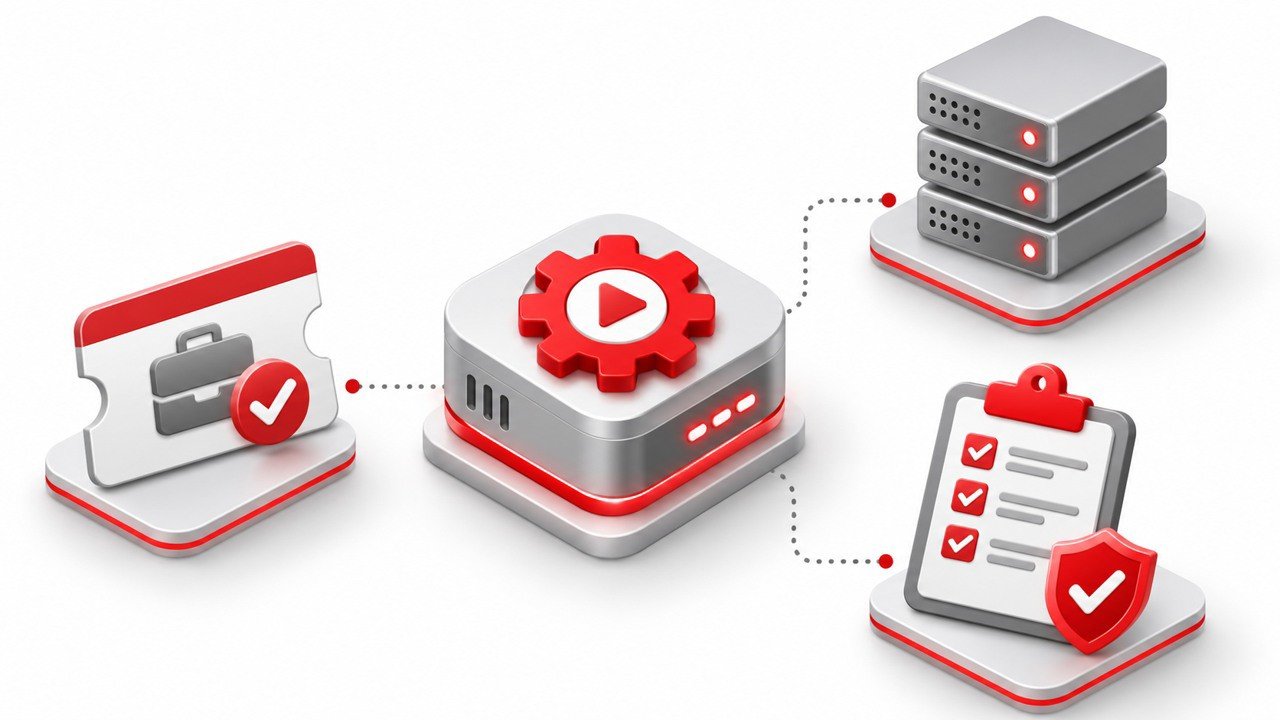
Record the change ticket, target group, job result and exceptions together. Limit who can modify the playbooks, approve a run and use production credentials. A documented Standard Operating Environment gives the team an agreed configuration baseline to check against. Wiki Labs Ansible services describes RHEL patching and configuration checks as places to start.
Measure what improves before scaling
Record a baseline from recent maintenance windows. Track time from approval to verified completion, manual steps per run, hosts that need follow-up and the time it takes to assemble evidence. Record the number of hosts in each window so comparisons remain meaningful as coverage changes.
Use the pilot results to decide whether to expand to more RHEL groups or tackle a different workflow. Teams should also budget time to maintain the playbooks, inventory, credentials and execution environments. Those are ongoing responsibilities once the workflow becomes part of production operations.
Choose one RHEL server group and map its next patch window from approval through service verification. Agree on who can pause the run and what evidence closes the change. Review the first run with the service owner, then use what you learn to decide where to expand.
From AD Discovery to Continuous Governance: Key Takeaways from Wiki Labs, SolarWinds & M.Tech
23 November 2026•4 min read
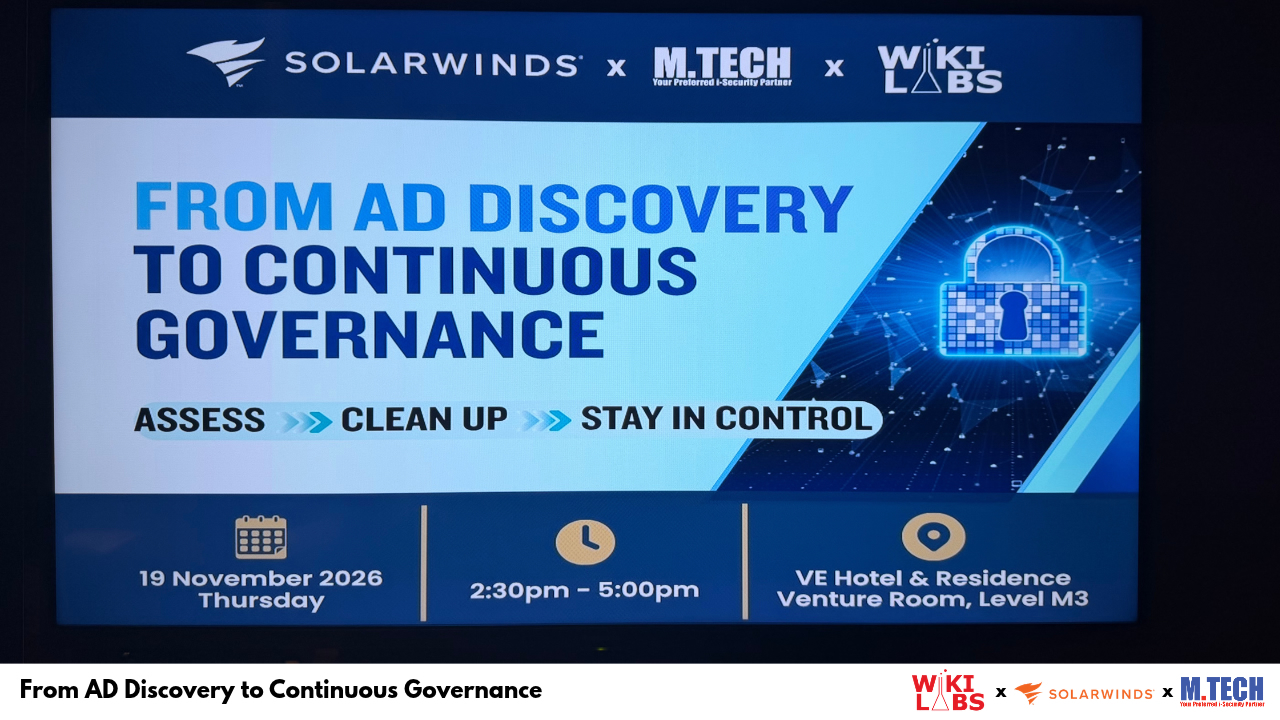
19 November 2026 | VE Hotel & Residence, Kuala Lumpur
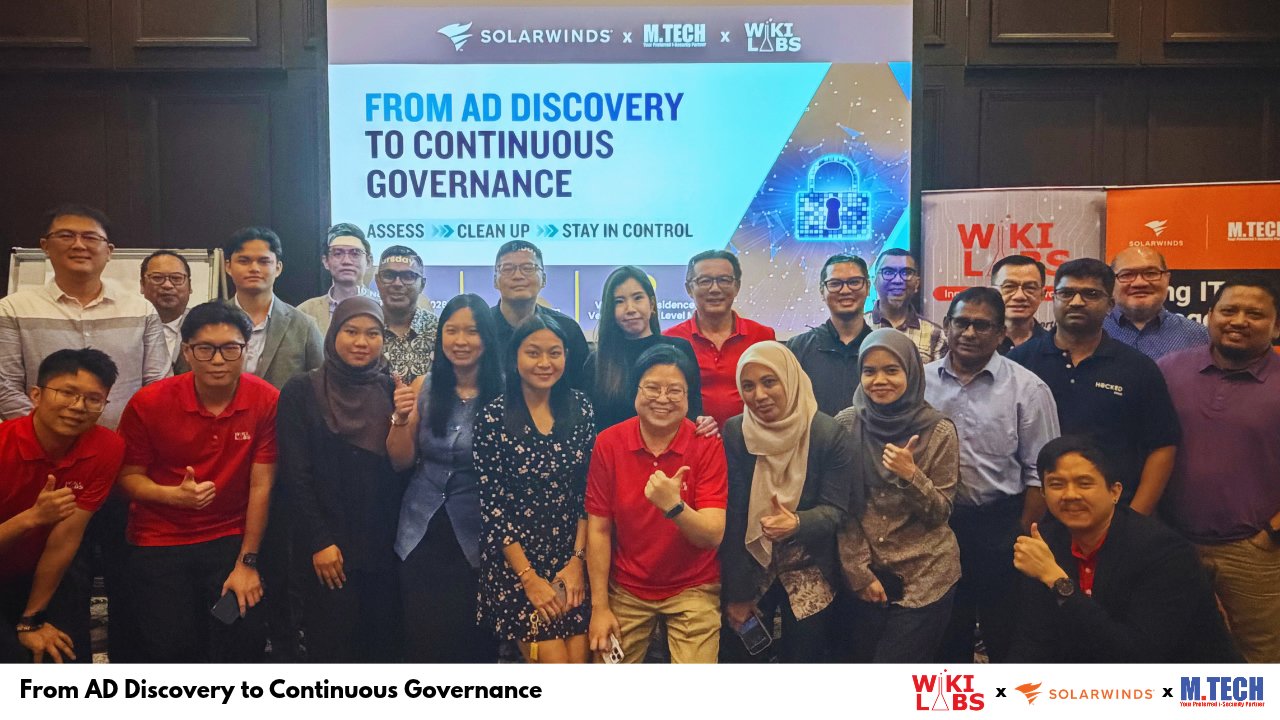
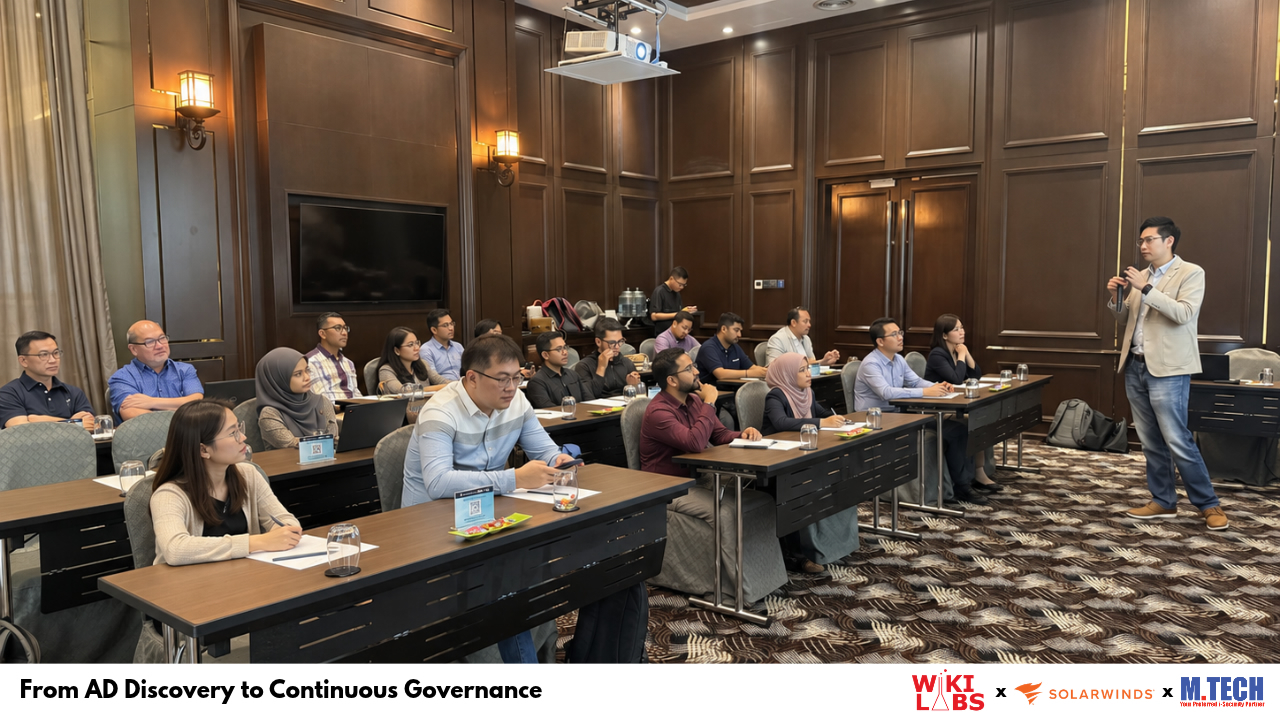
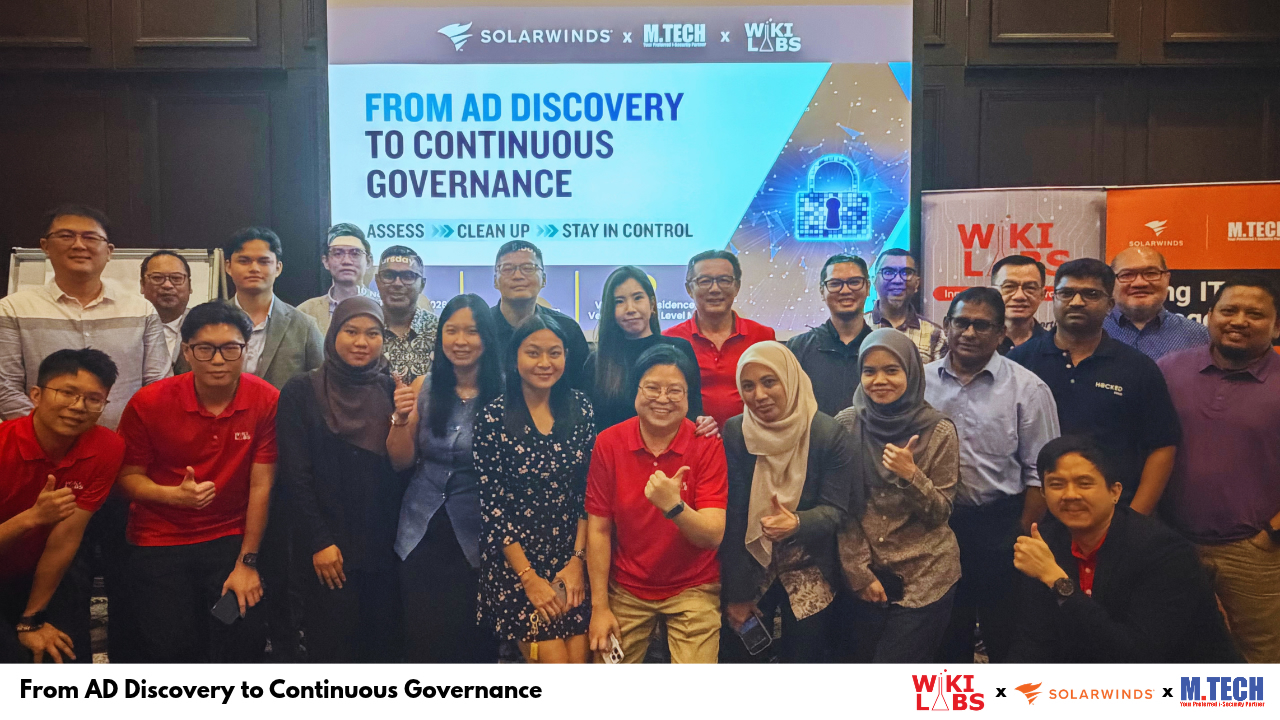
On 19 November 2026, Wiki Labs, in collaboration with SolarWinds and M.Tech, hosted “From AD Discovery to Continuous Governance” at VE Hotel & Residence, Kuala Lumpur.
The event brought together IT professionals and industry representatives for an insightful afternoon focused on strengthening Active Directory (AD) security, identifying potential identity-related risks, and establishing effective access governance practices.
Under the theme “Assess, Clean Up, Stay in Control,” the session explored how organisations can move beyond one-time security assessments towards a more structured and continuous approach to managing their Active Directory environments.
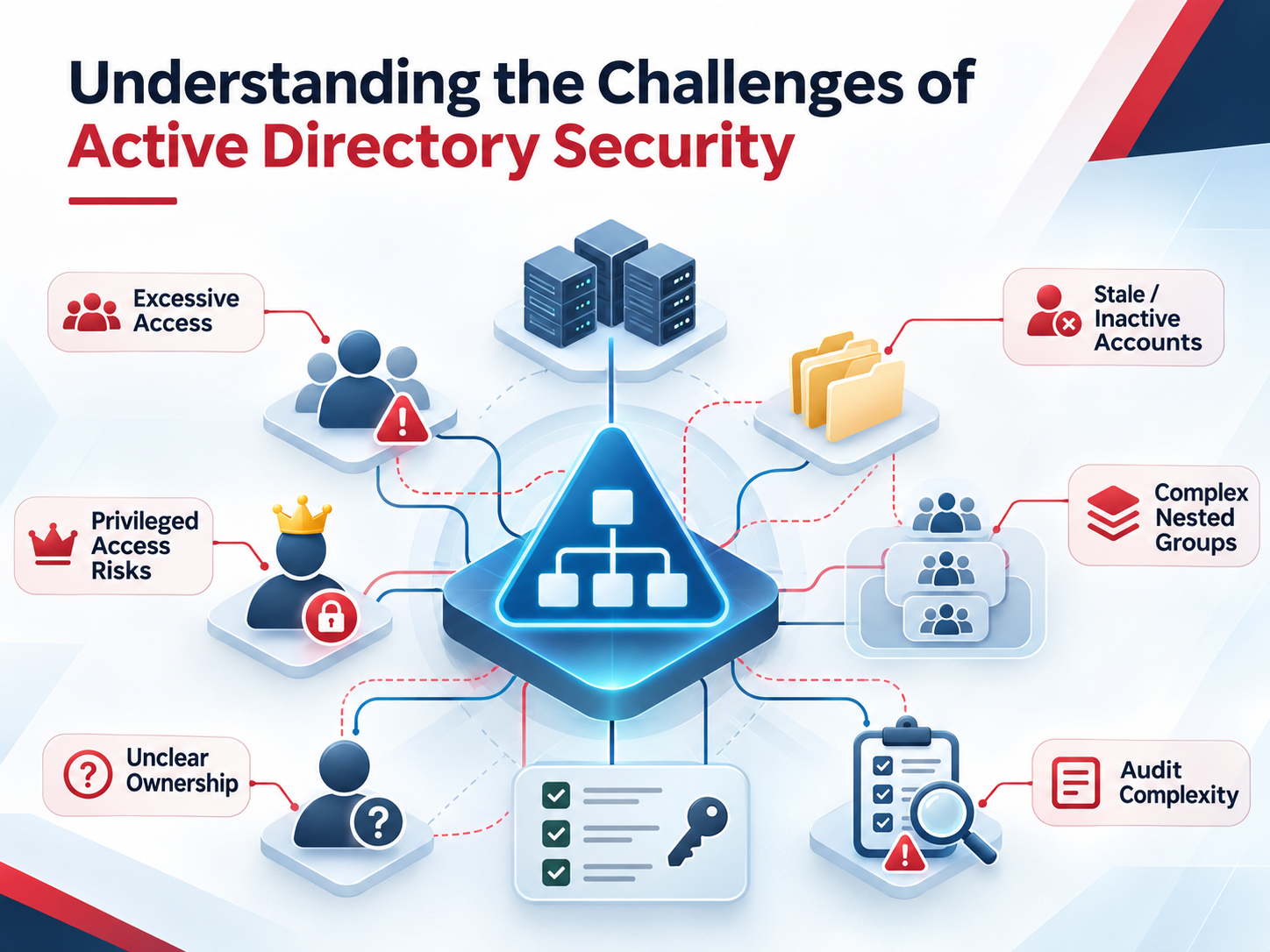
Understanding the Challenges of Active Directory Security
As organisations grow, their Active Directory environments become increasingly complex. User accounts, group memberships, administrative privileges, and access permissions can accumulate over time, creating potential security exposures.
Employees may retain unnecessary permissions after changing roles, inactive accounts may remain within security groups, and complex access relationships can make it difficult for IT teams to maintain visibility and control.
These challenges highlight an important consideration: identifying security risks is only the beginning. Organisations must also address those risks and establish ongoing governance to prevent unnecessary access from accumulating again.
The event explored this challenge through two complementary approaches: Active Directory security assessment and remediation, followed by continuous access rights management.
Identifying AD Security Risks with Wiki Labs RISAR
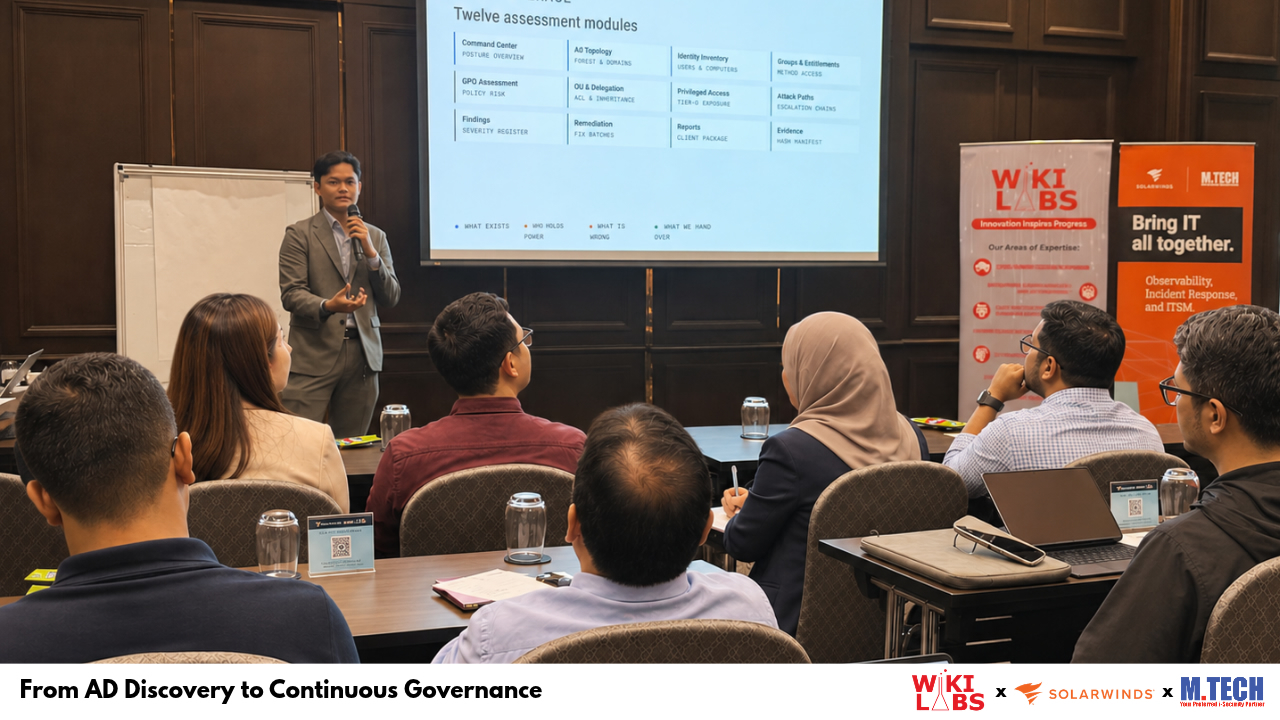
The first technical session, “Rapid Identity Security Assessment & Remediation,” introduced Wiki Labs’ RISAR solution and its approach to identifying security exposures within Active Directory environments.
RISAR is a local-first assessment platform developed by Wiki Labs to help organisations gain greater visibility into their identity infrastructure.
Using read-only data collection, RISAR examines key areas of the AD environment, including:
Identity inventory and group memberships
Privileged accounts and Tier-0 security exposure
Group Policy Objects (GPO) and delegated permissions
Potential privilege escalation and attack paths
Security findings supported by evidence and remediation recommendations
The session highlighted the importance of understanding not only which accounts hold elevated privileges, but also how indirect permissions and configuration weaknesses could create pathways to more sensitive systems.
By identifying and prioritising security findings, organisations can take a more structured approach to remediation, supported by documented evidence and validation.
Moving Towards Continuous Governance with SolarWinds ARM
Building on the assessment and remediation discussion, the second session, “Governing Permissions Across AD with SolarWinds ARM,” explored how organisations can maintain ongoing control over access rights.
Presented by SolarWinds, the session introduced SolarWinds Access Rights Manager (ARM) and its role in improving access visibility, managing permissions, and supporting audit readiness.
The presentation highlighted four key capabilities:
See It — Understand Access Permissions
Gain visibility into who has access to resources, what permissions they hold, and how those permissions were granted.
Fix It — Manage Access Rights
Streamline permission provisioning and deprovisioning, including access changes when employees join, move between roles, or leave an organisation.
Prove It — Support Auditing and Accountability
Maintain records of permission changes, approvals, and access activities to support internal reviews and compliance requirements.
Hand It Over — Enable Data Owner Involvement
Allow designated data owners to participate in access approval and review processes, reducing unnecessary administrative involvement.
The session also demonstrated how ongoing access monitoring, recertification, and structured permission management can help organisations strengthen their overall security posture.
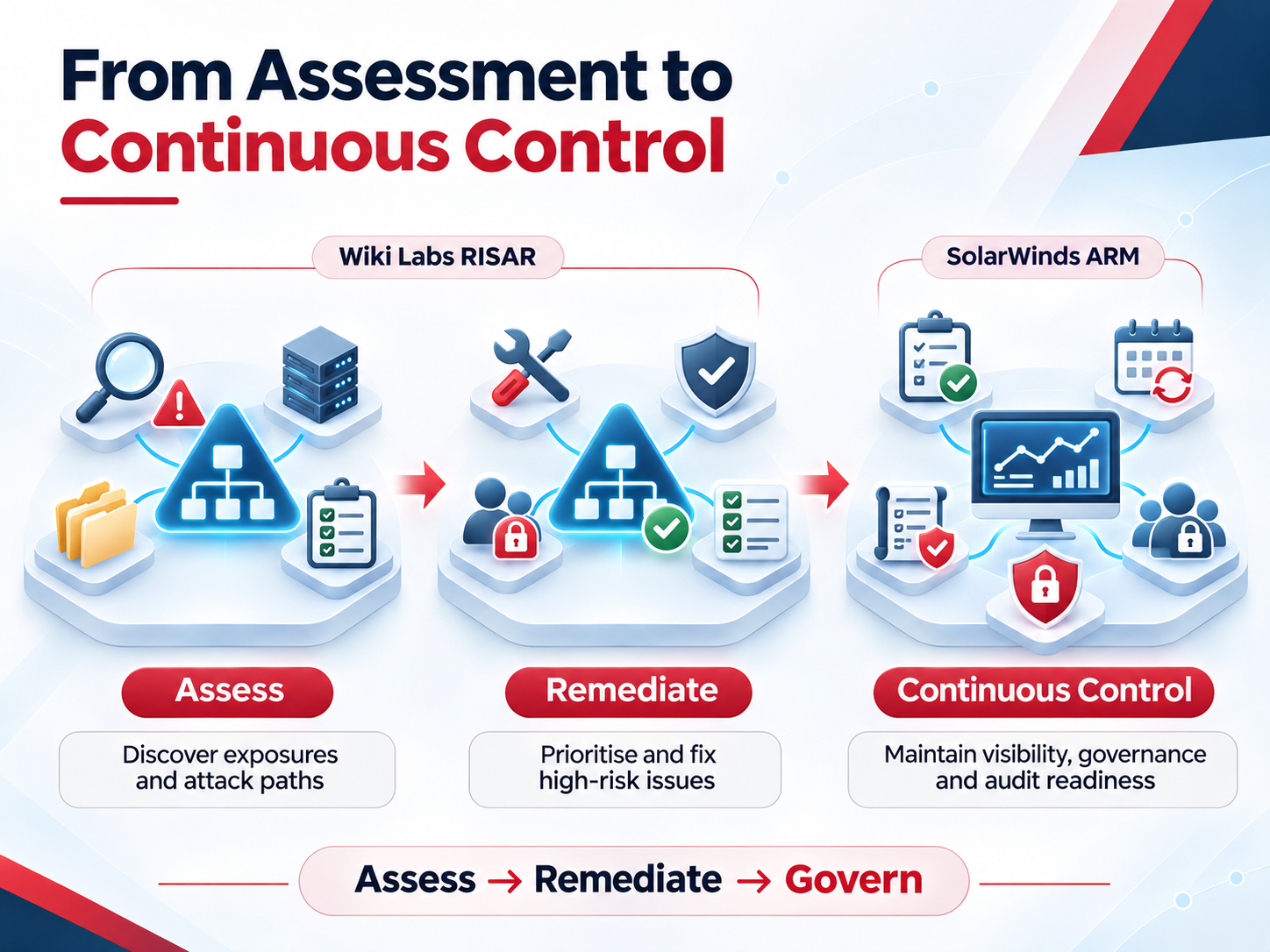
From Assessment to Continuous Control
One of the key takeaways from the event was the complementary relationship between Wiki Labs RISAR and SolarWinds ARM.
While RISAR focuses on identifying security risks, analysing attack paths, and supporting remediation, SolarWinds ARM addresses the ongoing management and governance of access permissions.
Together, these approaches support a three-stage journey:
1. Assess — Discover identity-related security exposures, excessive privileges, and potential attack paths within the AD environment.
2. Remediate — Prioritise and address identified risks to establish a more secure and documented baseline.
3. Govern — Maintain visibility and control over access rights through continuous monitoring, permission management, and periodic reviews.
This approach helps organisations move from reactive security assessments towards more sustainable identity governance practices.
Beyond the technical presentations, the event provided an opportunity for attendees to exchange perspectives and gain a better understanding of practical approaches to Active Directory security and governance.
Wiki Labs would like to extend our sincere appreciation to SolarWinds and M.Tech for their valuable collaboration and support in making this event possible.
We would also like to thank all our customers and attendees for taking time out of their busy schedules to join us. Your participation and engagement contributed to a meaningful afternoon of learning and discussion.
At Wiki Labs, we remain committed to helping organisations strengthen their IT environments through practical technology solutions, collaboration, and continuous innovation.
Your IT Team Is Busy. But How Much of Their Work Creates Business Value?
Why IT operational efficiency is no longer just about reducing costs — and how enterprise automation helps organisations achieve more with existing resources.
Your IT team is constantly busy.
Servers need maintenance. Security patches must be deployed. New environments must be provisioned. Configuration changes require attention. Incidents need investigation, and routine operational requests continue to accumulate.
But while these activities are necessary to keep systems running, they raise an important question:
How much of your IT team’s time is spent maintaining existing operations instead of improving the business?
For many enterprises, the challenge is not necessarily a lack of technical expertise or infrastructure investment.
It is the growing amount of repetitive work required to maintain increasingly complex IT environments.
As businesses expand across on-premises infrastructure, virtualised environments and hybrid cloud platforms, manual operational processes can become a significant source of inefficiency.
This is why IT operational efficiency and cost optimization should be considered strategic priorities rather than simple cost-cutting exercises.
With technologies such as Red Hat Ansible Automation Platform, enterprises can reduce repetitive administration, standardise operational workflows and make better use of their existing IT resources.
The Hidden Costs of Manual IT Operations
When organisations evaluate IT costs, they often focus on visible expenses such as infrastructure, software subscriptions, hardware maintenance and cloud consumption.
However, some of the most significant operational inefficiencies are less obvious.
They exist in the everyday activities performed by infrastructure and operations teams.
Consider the number of routine activities performed across an enterprise IT environment.
An infrastructure engineer may spend hours each week checking server configurations, deploying updates, restarting services or preparing operational reports.
Another engineer may need to perform similar activities for a different group of servers.
Individually, these tasks may appear manageable. But when repeated across hundreds of systems, they consume considerable engineering capacity.
The result is an IT team that remains occupied with routine maintenance rather than initiatives that could improve business performance.
2. Manual Processes Increase the Cost of Errors
Repetitive activities can also introduce inconsistencies.
Different engineers may follow slightly different procedures, particularly when operational documentation is outdated or configuration requirements vary.
A missed setting, incorrect deployment step or incomplete change can create additional troubleshooting work.
In more critical environments, these errors may lead to service disruption, delayed projects or security exposure.
The cost is not limited to fixing the original mistake. It may also include incident investigation, recovery activities and time spent coordinating multiple teams.
3. Operational Complexity Makes IT Difficult to Scale
As an organisation grows, the number of applications, servers and infrastructure components usually increases.
However, relying on manual processes often means that increased infrastructure demand also creates additional administrative work.
Without improving operational processes, businesses may respond by hiring more engineers or outsourcing more activities.
While additional resources can be necessary, increasing headcount alone does not address the underlying inefficiency.
A more sustainable approach is to reduce the amount of repetitive work required to manage each additional system.
4. Limited Visibility Makes Cost Optimization Difficult
Many organisations know how much they spend on infrastructure but have limited visibility into the engineering effort required to operate it.
For example, how many hours does the team spend on monthly patching? How many service requests require manual intervention? How frequently do configuration errors lead to rework?
Without understanding where time and resources are being consumed, it becomes difficult to identify meaningful opportunities for improvement.
Operational efficiency begins with making these activities measurable.
Real-World Example: Kreditplus, Indonesia
How Enterprise Automation Helped Simplify Operations and Reduce Costs
PT KB Finansia Multi Finance, commonly known as Kreditplus, provides a useful Southeast Asian example of how infrastructure modernisation and automation can improve operational efficiency.
Based in Indonesia, Kreditplus operates in the financial services industry, where infrastructure reliability, security and service delivery are important business requirements.
Over decades of operations, the organisation had accumulated a diverse technology environment.
Managing these technologies required significant effort from its IT operations team, particularly in maintaining security, compliance and existing infrastructure.
As business requirements evolved, these operational complexities made it more difficult to introduce new services quickly.
The Challenge: Too Much Effort Maintaining Existing Infrastructure
Kreditplus needed to improve the way its infrastructure supported application development and ongoing operations.
Its existing environment created several challenges, including lengthy manual provisioning activities, complex infrastructure management and repetitive security maintenance.
IT operations teams also needed to respond to requests from development teams, creating additional administrative workloads and potential delays.
The organisation recognised that a more standardised and automated environment would help reduce these operational constraints.
The Solution: Standardisation and Automation With Red Hat
Kreditplus worked with technology partner PT Mitra Integrasi Informatika (MII) to modernise its environment using:
Red Hat Enterprise Linux
Red Hat OpenShift
Red Hat Ansible Automation Platform
Together, these technologies helped create a more consistent and manageable infrastructure environment.
Ansible Automation Platform was used to automate provisioning and security hardening processes across development, staging and production environments.
Self-service capabilities reduced the need for IT operations teams to manually fulfil routine developer requests.
Automation also simplified security maintenance activities that previously required engineers to execute scripts individually across servers and virtual machines.
The Business Outcomes
According to Red Hat’s published customer case study, Kreditplus reported several improvements from its wider modernisation initiative.
70% savings in licensing costs
The organisation reported a substantial reduction in licensing expenses as part of its broader move to Red Hat technologies.
Reduced operational effort
Automated infrastructure activities helped free IT operations staff from repetitive manual work.
Faster development and service delivery
Self-service capabilities enabled development teams to access required environments with fewer operational delays.
Simplified security maintenance
Automation made it easier to execute routine security updates consistently across the environment.
What Malaysian Enterprises Can Learn
The Kreditplus experience highlights an important principle:
IT cost optimization is not simply about purchasing cheaper technology. It is about reducing the resources required to operate and maintain that technology.
By standardising platforms and automating routine activities, enterprises can improve operational efficiency while supporting faster business delivery.
However, the reported 70% licensing cost reduction should not be interpreted as a guaranteed saving from Ansible alone. The outcome reflects Kreditplus’ broader infrastructure modernisation, and actual results will depend on each organisation’s existing environment and cost structure.
Source: Red Hat, “Kreditplus modernizes services with Red Hat technologies”, published February 2025. Kreditplus is a Red Hat customer example, not a Wiki Labs customer engagement.
How Red Hat Ansible Automation Platform Improves Operational Efficiency
Red Hat Ansible Automation Platform enables enterprises to automate and coordinate repetitive IT activities using reusable playbooks, workflow orchestration and centralised automation management.
Instead of repeatedly performing the same procedures across different systems, infrastructure teams can establish consistent workflows that execute approved tasks in a controlled manner.
For enterprises seeking to improve IT operational efficiency, several use cases offer practical opportunities.
Automating Routine Infrastructure Maintenance
Many recurring activities follow predictable procedures.
These may include operating system updates, configuration checks, service management, account administration and software installation.
Ansible Playbooks allow organisations to define these procedures as reusable automation content.
Once tested and approved, the same workflows can be executed across the appropriate infrastructure environments.
This helps reduce repetitive effort and improves process consistency.
Accelerating Infrastructure Provisioning
New infrastructure requests often involve multiple operational steps.
Creating virtual machines, configuring operating systems, applying security settings and preparing environments for application deployment can require coordination across different teams.
Ansible Automation Platform can integrate with supported infrastructure and cloud technologies to automate these activities.
By reducing manual intervention, organisations can shorten deployment cycles and improve service delivery predictability.
Standardising Configuration Management
Configuration inconsistencies can generate unnecessary troubleshooting and maintenance work.
With Ansible, infrastructure teams can define approved system configurations and apply them consistently across managed environments.
This helps reduce configuration drift and the operational effort required to identify and correct inconsistent settings.
Reducing Repetitive Incident-Response Tasks
Certain operational incidents involve well-understood remediation procedures.
Examples may include restarting a failed service, collecting diagnostic information or performing predefined recovery checks.
When integrated with supported event sources and monitoring tools, Event-Driven Ansible can trigger approved automation workflows in response to defined conditions.
This can help reduce manual intervention for suitable recurring incidents while maintaining appropriate escalation and approval controls.
Not every incident should be resolved automatically. Production-critical remediation still requires careful consideration of business impact and operational risk.
Improving Operational Visibility
Automation also helps organisations establish clearer records of routine activities.
Centralised job management provides visibility into execution outcomes, failures and exceptions.
These records can help infrastructure teams understand where processes require improvement and identify activities that consume unnecessary resources.
For management teams, this creates a stronger foundation for evaluating automation effectiveness.
How Can Enterprises Measure the Financial Value of IT Automation?
One of the most common mistakes organisations make is measuring automation success solely by how many tasks have been automated.
A higher number of automated workflows does not automatically translate into meaningful business value.
Instead, organisations should evaluate the operational improvements generated by automation.
1. Engineering Hours Recovered
Measure the manual effort required to complete an activity before and after automation.
For example, consider an illustrative scenario involving monthly server maintenance.
Metric
Before automation
After automation
Servers managed
200
200
Manual effort per server
20 minutes
5 minutes
Total engineering effort
66.7 hours
16.7 hours
Monthly effort recovered
—
50 hours
In this hypothetical scenario, automation could recover approximately 50 engineering hours each month.
That represents around 600 hours annually that could potentially be redirected towards higher-value activities.
These figures are illustrative, not actual customer results. They exclude automation development, maintenance, exception handling and other implementation costs.
2. Operational Cost Avoidance
Recovered engineering hours can be translated into an indicative labour-capacity value.
However, saving employee time does not automatically reduce payroll expenses.
For many enterprises, the greater benefit may be avoiding additional headcount, reducing overtime or improving service capacity without increasing operational resources.
3. Reduced Incident and Rework Effort
Standardised automation can help reduce avoidable configuration errors and repetitive troubleshooting.
Enterprises can evaluate improvements through metrics such as failed changes, recurring incidents, time spent on remediation and operational rework.
4. Faster Service Delivery
Shorter provisioning and service-request turnaround times may help application and business teams deliver projects sooner.
Although these benefits can be more difficult to translate directly into cost savings, they contribute to broader organisational productivity.
5. Total Cost of Ownership
An automation business case must also consider the cost of adopting and maintaining the solution.
This includes platform subscriptions, integration, implementation, training, testing and ongoing support.
The objective is to evaluate whether the measurable operational benefits justify the overall investment.
Successful automation should be measured by the value it creates, not simply the number of scripts or playbooks deployed.
Why Enterprises Can Trust Wiki Labs
Choosing an enterprise automation solution is only one part of improving IT operational efficiency.
Organisations also need a technology partner that understands how infrastructure, processes, security requirements and operational costs are connected.
Wiki Labs combines enterprise open-source expertise with practical infrastructure management experience to help Malaysian organisations improve the efficiency, consistency and reliability of their IT operations.
More Than 15 Years of Enterprise IT Experience
Established in 2009, Wiki Labs is a Malaysian enterprise IT solutions provider with experience supporting large organisations across multiple industries, including financial services and telecommunications.
Wiki Labs is listed in the official Red Hat Ecosystem Catalog, which identifies its infrastructure, cloud, security and application modernisation capabilities.
Its publicly listed Red Hat partner profile also records professional certifications and credentials across relevant enterprise technologies.
This provides customers with an independently verifiable indication of Wiki Labs’ technical capabilities and Red Hat ecosystem involvement.
Recognised Red Hat Partner Achievements
Wiki Labs has received recognition through Red Hat Partner Day ASEAN, including:
CY22 Top OpenShift Partner of the Year
CY22 Top Commercial Partner of the Year
FY20 Advanced Partner of the Year
These awards reflect its established experience in the Red Hat partner ecosystem.
Proven Malaysian Enterprise Experience
More importantly, Wiki Labs has documented customer experience addressing infrastructure efficiency challenges.
In a customer story published through Red Hat, Wiki Labs described its long-term managed services engagement with a prominent Malaysian internet service provider.
The organisation engaged Wiki Labs to refresh its infrastructure using the Wiki Labs Standard Operating Environment (SOE).
According to the published story, the initiative improved infrastructure security and compliance, increased productivity and reduced the IT team’s workload by approximately 25–50%.
This provides a relevant example of how Wiki Labs’ infrastructure management approach has supported measurable operational improvements.
The same customer story describes Wiki Labs’ engagement with a major Malaysian insurance organisation.
Wiki Labs assessed the customer’s existing environment and introduced a customised SOE approach to improve infrastructure management.
The engagement supported more accurate IT asset visibility, timely patch updates, standardised post-provisioning activities and better operational control.
These examples reflect Wiki Labs’ experience addressing the operational challenges faced by large Malaysian enterprises.
A Structured Approach to IT Operational Efficiency
Wiki Labs’ Standard Operating Environment framework extends beyond individual automation tasks.
Its scope includes infrastructure inventory, provisioning, software lifecycle management, patch management, configuration and compliance management, and incident response.
This allows organisations to examine how different IT processes connect and where improvements can deliver meaningful business value.
For enterprises considering Red Hat Ansible Automation Platform, Wiki Labs can help identify suitable automation opportunities, establish repeatable workflows and align implementation with existing operational requirements.
Focused on Practical, Measurable Improvements
Not every IT task should be automated, and not every automation opportunity will generate sufficient financial value.
An effective implementation should begin by identifying high-effort, repetitive and well-understood processes.
Wiki Labs’ SOE methodology incorporates assessment, solution design, implementation, review and continuous improvement.
This provides a structured way to evaluate operational challenges before introducing technology changes.
Rather than focusing solely on the technical implementation, the objective is to build more predictable and manageable IT operations that support business requirements.
The First Step Towards IT Cost Optimization
For enterprises looking to improve operational efficiency, the starting point should not necessarily be a large-scale automation project.
Instead, organisations can begin by assessing their existing IT activities and identifying where resources are being consumed unnecessarily.
Consider the following questions:
Which routine IT activities consume the most engineering hours?
How many repetitive tasks are still performed manually?
Are similar procedures executed differently across teams or environments?
Which recurring incidents require predictable remediation steps?
Can infrastructure processes be standardised before automation?
How are improvements in engineering capacity and operational costs currently measured?
These questions help establish where automation may generate the greatest value.
A phased approach allows organisations to validate initial results before expanding automation across additional systems and workflows.
Make Your IT Team More Productive, Not Just Busier
Enterprise IT teams will always need to maintain infrastructure, address incidents and support operational requirements.
But the amount of manual effort required to perform these activities does not need to grow at the same rate as the infrastructure itself.
By reducing repetitive administration and introducing standardised automation, organisations can create more capacity for strategic initiatives without compromising essential operational controls.
The opportunity is not simply to reduce IT spending.
It is to make better use of the technology, expertise and resources that the organisation already has.
With Red Hat Ansible Automation Platform and Wiki Labs’ enterprise infrastructure experience, Malaysian businesses can take a more structured approach to operational efficiency, automation and long-term cost optimization.
Let’s Talk It Over Lunch
Is your IT team spending too much time keeping the lights on?
Join Wiki Labs for a discussion on how your organisation can reduce repetitive IT activities, identify high-value automation opportunities and improve operational efficiency.
Explore how Red Hat Ansible Automation Platform and Wiki Labs’ Standard Operating Environment approach can support more efficient, consistent and scalable IT operations.
Beyond the Pink Ribbon: Wiki Labs Raises RM15,620 for MAKNA This Pink October
Bringing people together through cancer awareness, collective generosity and a shared commitment to making a difference.
Every October, Pink October serves as an important reminder of the need to raise awareness about breast cancer, encourage early detection and extend support to individuals and families affected by cancer.
At Wiki Labs, we believe that making a positive difference goes beyond technology and business. It is also about showing compassion, supporting our communities and taking meaningful action together.
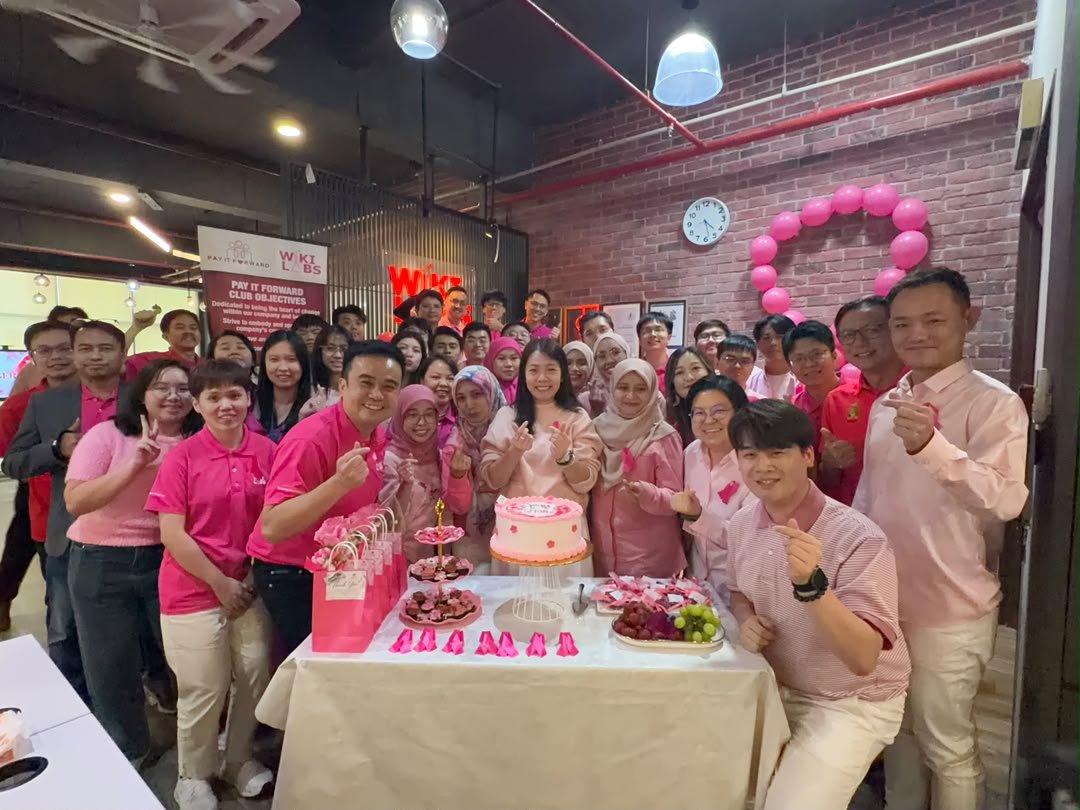
On Friday, 30 October 2026, Wiki Labs held its annual Pink October awareness activity at our office, in collaboration with MAKNA (Majlis Kanser Nasional), a Malaysian non-profit organisation dedicated to supporting cancer patients and their families.
The occasion brought together Wikians and representatives from MAKNA for a meaningful session of cancer awareness, knowledge sharing and community support.
Through the collective generosity of our Wikians and contributors, we successfully raised RM15,620, which was donated to MAKNA to support its ongoing efforts in helping those affected by cancer.
RM15,620 Raised, One Shared Purpose
The success of this year’s Pink October initiative reflects the kindness, generosity and collective spirit of everyone who contributed.
Throughout the campaign, Wikians and supporters came together with a shared goal: to extend hope and meaningful assistance to those facing the challenges of cancer.
Every contribution, regardless of its amount, played a part in achieving the fundraising total of RM15,620.
As part of the Pink October activity on 30 October 2026, Wiki Labs presented the funds raised to MAKNA during a donation handover ceremony at our office.
The contribution reflects our commitment to supporting organisations that make a meaningful difference in the community.
Beyond the financial contribution, the initiative also reminded us that meaningful change does not always require extraordinary actions. Sometimes, it begins with people coming together, showing kindness and contributing whatever they can towards a shared cause.
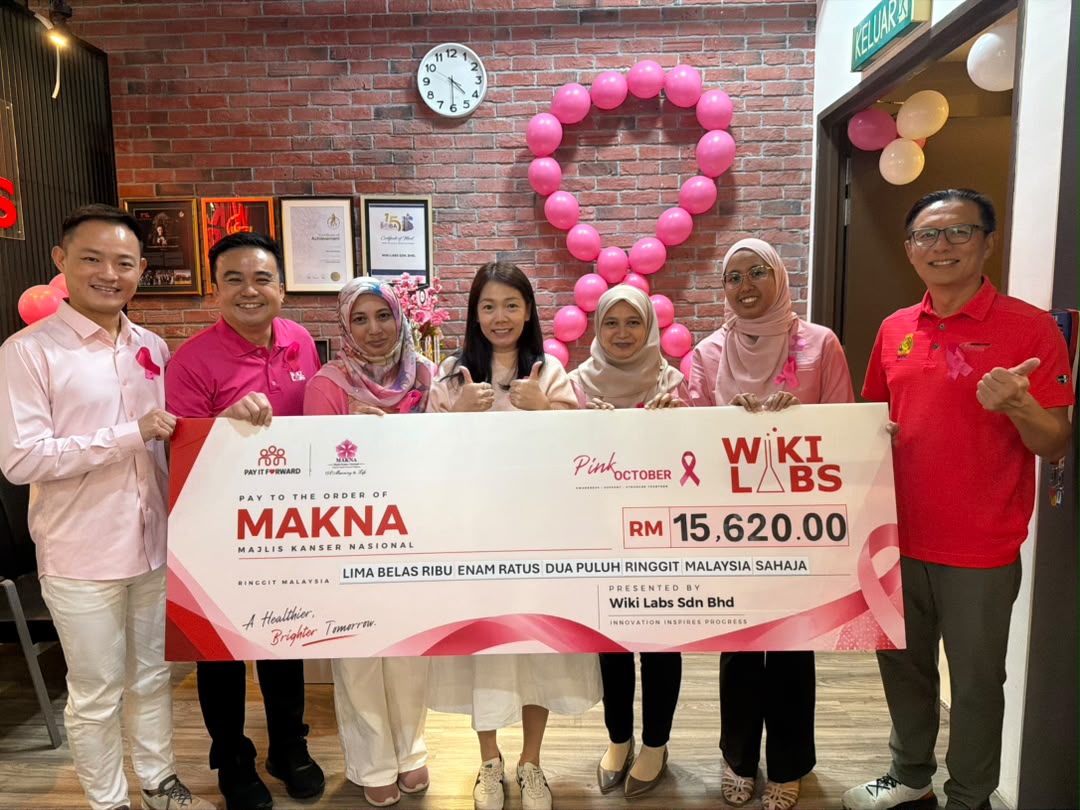
Representatives from Wiki Labs Sdn Bhd and MAKNA during the Pink October 2026 donation handover ceremony on 30 October 2026, marking a total contribution of RM15,620. From left: Edmond Tey (Wiki Labs CEO), Alban Seah (Wiki Labs CTO), Idra (Pink October Team Advisor), May Lim (Wiki Labs CFO), Puan Norli binti Ismail (MAKNA), Cik Syarah Nur Qistina binti Idros (MAKNA), and TJ Quah (Wiki Labs CRO).
Beyond Fundraising: Building Awareness Through Knowledge
While fundraising was an important part of our Pink October initiative, we also believe that awareness begins with education and understanding.
As part of the activity, we were honoured to welcome representatives from MAKNA to the Wiki Labs office for an informative cancer awareness sharing session.
The session provided our Wikians with an opportunity to learn more about cancer-related matters, gain valuable health awareness insights and develop a better understanding of the importance of staying informed about our wellbeing.
It also reminded us that cancer awareness extends beyond recognising the disease itself. It involves understanding the challenges faced by patients and their families, encouraging open conversations about health and recognising the importance of timely medical attention.
Most importantly, the sharing reinforced that cancer awareness should not be limited to a single month.
Although Pink October is widely recognised as Breast Cancer Awareness Month, the importance of health education, compassion and community support remains relevant throughout the year.
We would like to express our sincere appreciation to the MAKNA representatives for taking the time to visit our office and share their knowledge with our team.
Their informative sharing made the occasion especially meaningful, allowing our Wikians to take away valuable lessons that extend beyond the workplace.
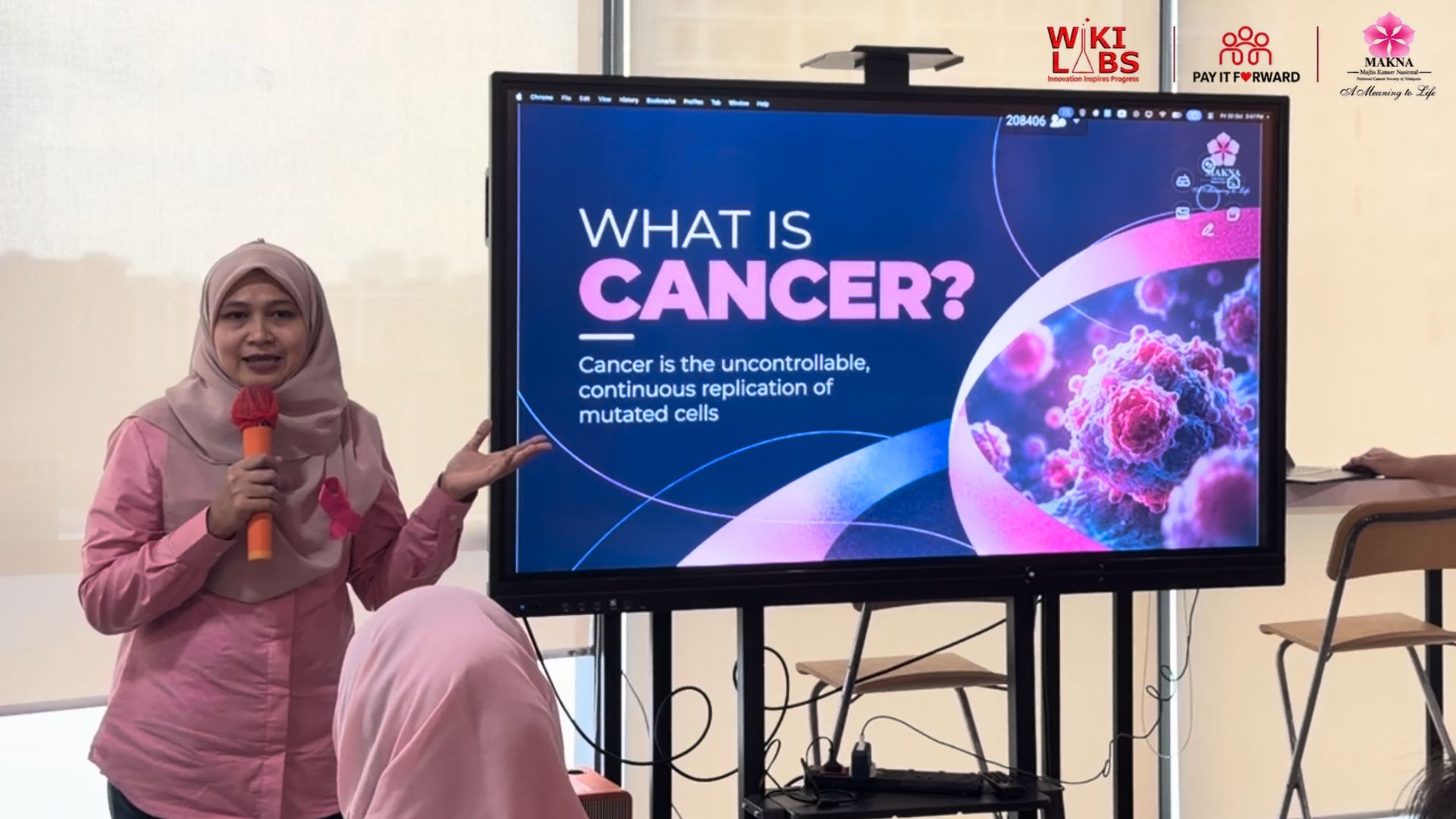
Puan Norli, from MAKNA, delivering a cancer awareness sharing session to Wiki Labs employees on 30 October 2026, highlighting the importance of health awareness, education and community support.
Behind the Scenes: The People Who Made It Possible
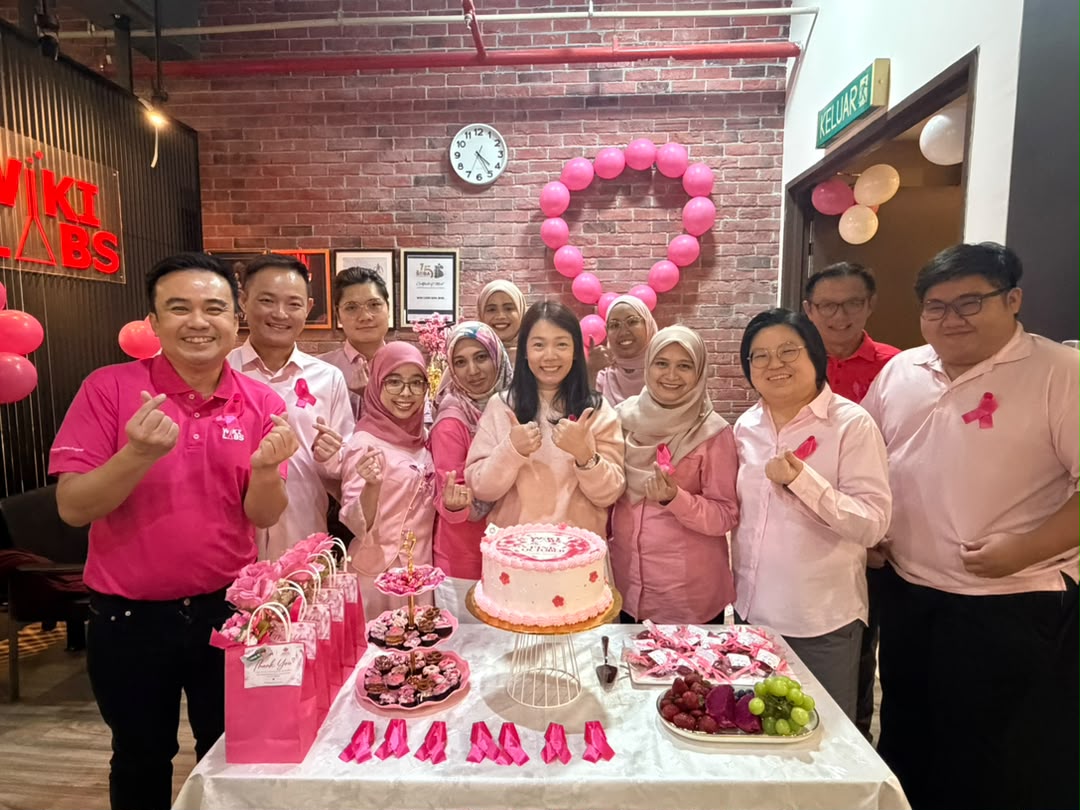
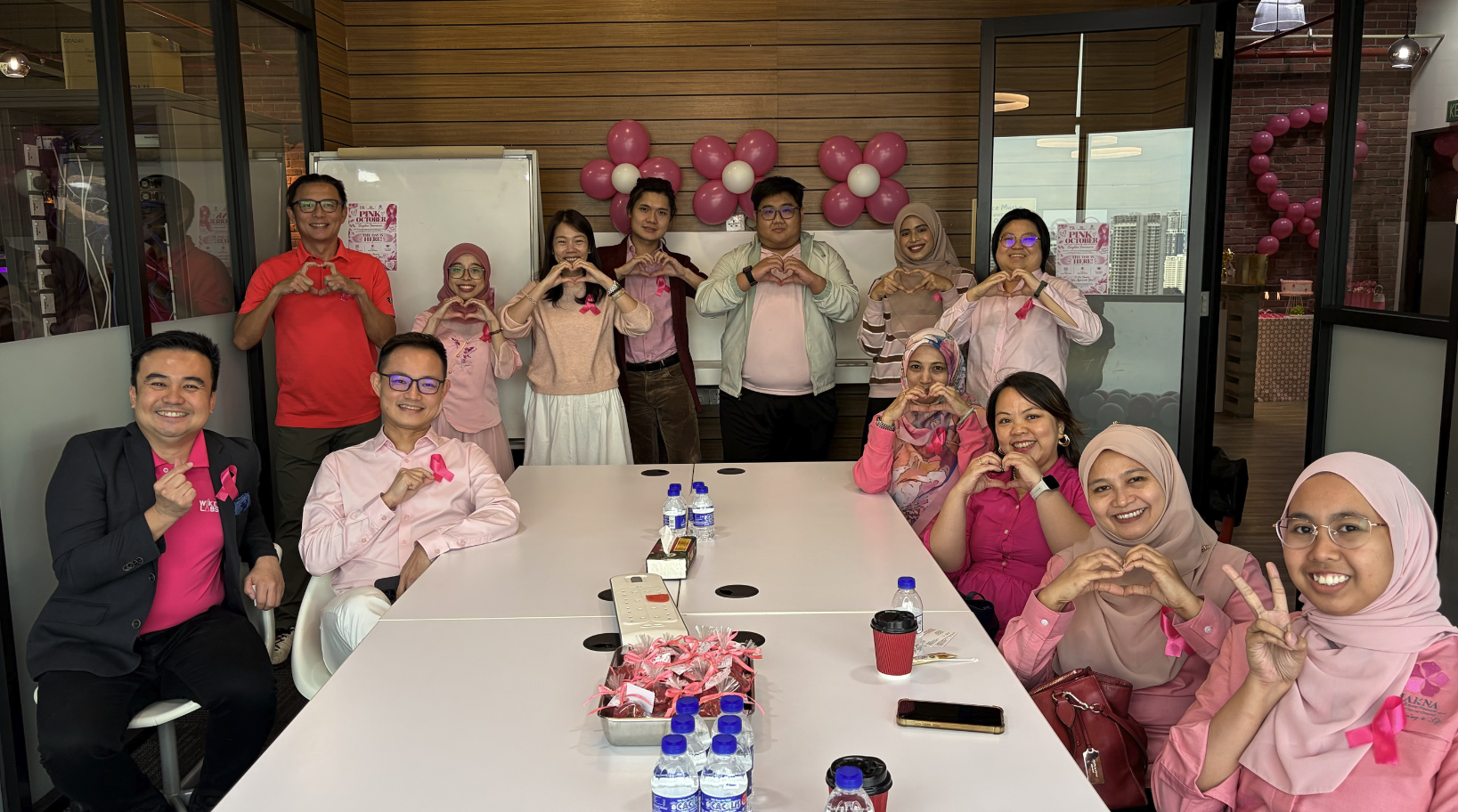
The Wiki Labs Pink October 2026 CSR organising team, who played a key role in bringing this meaningful initiative to life.
Behind every meaningful initiative are people who are willing to dedicate their time and effort to making it happen.
Our Pink October 2026 activity was no exception.
From preparing campaign materials and coordinating arrangements to encouraging contributions and supporting the activities, our Wikians played an important role in bringing the initiative together.
These efforts, both big and small, reflected the teamwork and generosity that helped make the campaign possible.
For us, the most meaningful part of Pink October was not simply the amount raised, but the shared commitment demonstrated by everyone involved.
The initiative created an opportunity for our people to come together beyond their daily responsibilities, contribute towards a meaningful cause and strengthen the spirit of giving within our workplace.
At Wiki Labs, we believe that corporate social responsibility is more than organising activities or making donations. It is about nurturing a culture where people care, collaborate and recognise the importance of giving back to society.
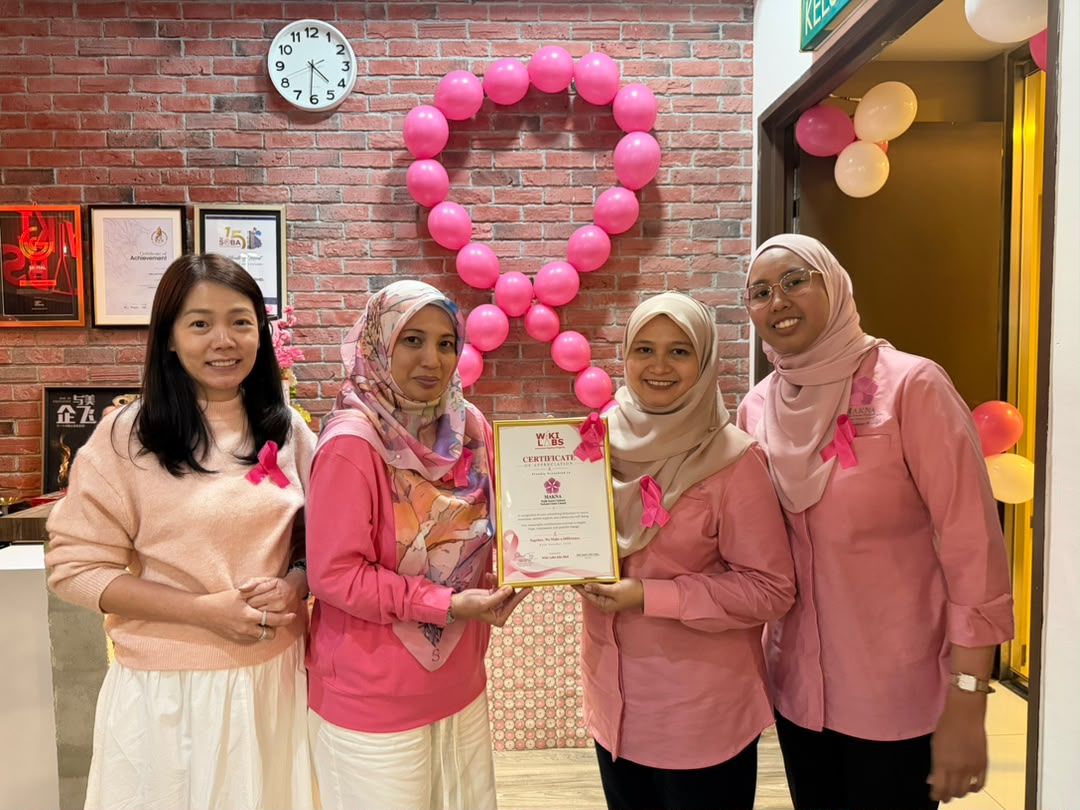
Behind the scenes of Wiki Labs Pink October 2026 — a glimpse into the preparations, teamwork and meaningful moments that brought our initiative to life.
Making a Difference Beyond Pink October
Although our Pink October 2026 activity has come to an end, the message behind the initiative remains just as important.
Cancer can affect individuals and families from all walks of life. For those navigating the challenges of the disease, access to appropriate care, emotional encouragement and a supportive community can make a meaningful difference.
Through our contribution to MAKNA, we hope to play a small part in supporting its ongoing efforts to assist cancer patients and their families.
We also hope that the knowledge shared during the awareness session will continue to encourage our Wikians to be more mindful of their health, stay informed and support those around them.
Awareness should not end when October does.
It is something we can continue to practise through everyday actions, whether by encouraging loved ones to seek appropriate health advice, participating in awareness initiatives or simply showing empathy to someone facing difficult circumstances.
When individuals and organisations work together, even small contributions can become part of something greater.
A Heartfelt Thank You to Everyone Who Made This Possible
As we reflect on our Pink October 2026 initiative, we would like to extend our heartfelt gratitude to everyone who contributed to its success.
To MAKNA, thank you for collaborating with us, visiting our office and sharing valuable knowledge about cancer awareness. We deeply appreciate the meaningful work your organisation continues to carry out in supporting Malaysia’s cancer community.
To every Wikian, contributor and supporter, thank you for your generosity, participation and encouragement throughout the campaign.
Whether you contributed through donations, helped with preparations or supported the activities, every effort played a part in making this initiative possible.
Together, we raised RM15,620 for MAKNA. But beyond the amount, we strengthened awareness, shared knowledge and came together with a common purpose — to bring hope and support to those who need it.
At Wiki Labs, we believe that progress is not only measured by technological advancement or business achievements, but also by the positive difference we make in people’s lives.
Because when people come together with compassion and purpose, meaningful progress becomes possible.